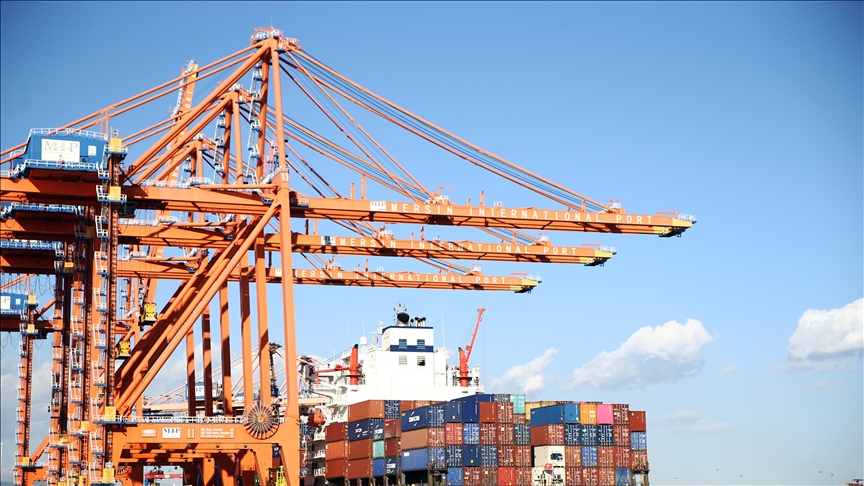
Türkiye's ports have demonstrated steady growth in cargo throughput throughout 2025, reinforcing the country's strategic importance in international logistics and trade routes connecting Europe, Asia, and the Middle East.
Cargo Throughput in Early 2025
In the first half of 2025 (January–June), ports across Türkiye handled a total of 275.1 million tons of cargo, representing a 2.2% increase compared to the same period in 2024. This positive momentum accelerated in June, when throughput reached 45.06 million tons, up 3.1% year over year. Major logistics hubs such as Kocaeli, which processed 7.33 million tons, and Aliağa with 6.9 million tons, led this growth, reflecting the efficiency and capacity of Türkiye's port infrastructure amid rising global demand for maritime transport.
Container Traffic Surge
Container handling also recorded strong expansion. During the first six months of the year, ports processed 7.01 million TEU (twenty-foot equivalent units), marking a 3.4% increase compared to the previous year. June performance was particularly notable, with 1.19 million TEU handled — a 5.2% year-over-year rise. Extending this trend, total cargo volumes for the January–November period reached 503.41 million tons, up 3.7%, with November alone contributing 46.86 million tons. These figures highlight Türkiye's ability to absorb growing trade flows, including imports from Asia and exports to European markets.
Dominant Ports and Strategic Role
The top ten ports, including İskenderun, Ceyhan, and Mersin, accounted for approximately 83.5%–84% of total national cargo volume, underlining their strategic importance. Ports such as İskenderun and Mersin benefit from close proximity to industrial zones and key energy corridors, enabling efficient handling of bulk cargo such as grains, coal, and oil products. This concentration further strengthens Türkiye's position as a pivotal transshipment hub, particularly for Black Sea routes linking Russia and Ukraine with Mediterranean trade lanes, even amid evolving geopolitical dynamics.